The autumn chill in Paris always brings a familiar hum of anticipation to the football world, but the 70th annual Ballon d’Or ceremony on 26 October 2026 felt distinctly different. For nearly two decades, the conversation around the sport's ultimate individual prize was dominated by a familiar duopoly, a constant debate over greatness that shaped a generation of fans. Since 1956, legends have aspired to lift this golden ball, which is decided through a meticulously calculated process. An international jury of one hundred specialised football journalists—one representing each of the top one hundred FIFA-ranked nations—evaluates a thirty-nominee shortlist. Each juror builds a personal top ten ballot based on individual performances, collective team achievements and on-field class. The points system then distributes fifteen points for a first-place vote, twelve for second, ten for third and down to a single point for tenth. The overall winner is simply the player who tallies the highest total score, with any deadlocks resolved by counting who secured the most individual top-ranking votes. As the curtains parted at the London Palladium—marking the first time the historic gala was held outside France—the evening belonged to a striker whose scores topped the global tally after spending his career quietly defying the critics, proving that patience and relentless consistency eventually carve a path to the very top. Growing up, every young footballer dreams of the moment they might be called the best on the planet. For years, that peak seemed reserved for the extraordinary, almost extraterrestrial talents who racked up trophies by the dozen. Fans watched from afar, marvelling at the staggering numbers but perhaps finding it difficult to relate to such effortless genius. We watched Lionel Messi accumulate a record-breaking eight titles across his unforgettable years in 2009, 2010, 2011, 2012, 2015, 2019, 2021 and 2023. We witnessed Cristiano Ronaldo claim five of his own in 2008, 2013, 2014, 2016 and 2017. Before them, three-time icons like Michel Platini, Johan Cruyff and Marco van Basten set standards we thought would stand for decades.
Harry Kane’s journey, however, felt entirely grounded in the real world. It was a story of resilience, of moving abroad to test oneself in a new culture and of the quiet belief that hard work is the ultimate equaliser. When Kane made the bold move to Bayern Munich, it was a decision met with both intrigue and scepticism. Leaving the familiar comforts of English football to lead the line for Germany’s most demanding club was an immense gamble. Yet, he embraced the pressure, adapting to a new language and a different tactical rhythm while maintaining the clinical edge that had always defined his game. His spectacular goal-scoring form did more than just secure victories; it galvanised a team and captured the imagination of football purists throughout Europe. That spectacular season led to the momentous event in London, where the narrative of football history has shifted. Surrounded by the next generation of breathtaking young talent, the seasoned forward was finally rewarded with the Men's Ballon d'Or, finishing ahead of Real Madrid's Kylian Mbappé and Barcelona's Lamine Yamal, who took home the Kopa Trophy. The evening was a historic sweep for talent old and new. Alexia Putellas reclaimed her throne by capturing her third Ballon d'Or Féminin for Barcelona—decided by a parallel panel of fifty specialised women's football journalists—matching her Spain teammate Aitana Bonmatí’s historic three-title legacy. Barcelona’s youth and mastery shone further with Vicky López taking the women’s young player equivalent and Pere Romeu being named Women's Coach of the Year, alongside their squad winning Women's Club of the Year. Meanwhile, Spain national boss Luis de la Fuente won Men's Coach of the Year, Unai Simón secured the Yashin Trophy ahead of Cata Coll's women's goalkeeper triumph and Paris Saint-Germain was named Men's Club of the Year. Charlyn Corral finished as the women's top scorer, while Arsenal's Bukayo Saka accepted the Sócrates Award for his humanitarian endeavours. Even Lionel Messi made his presence felt, remaining in the global elite with a fifth-place ranking.
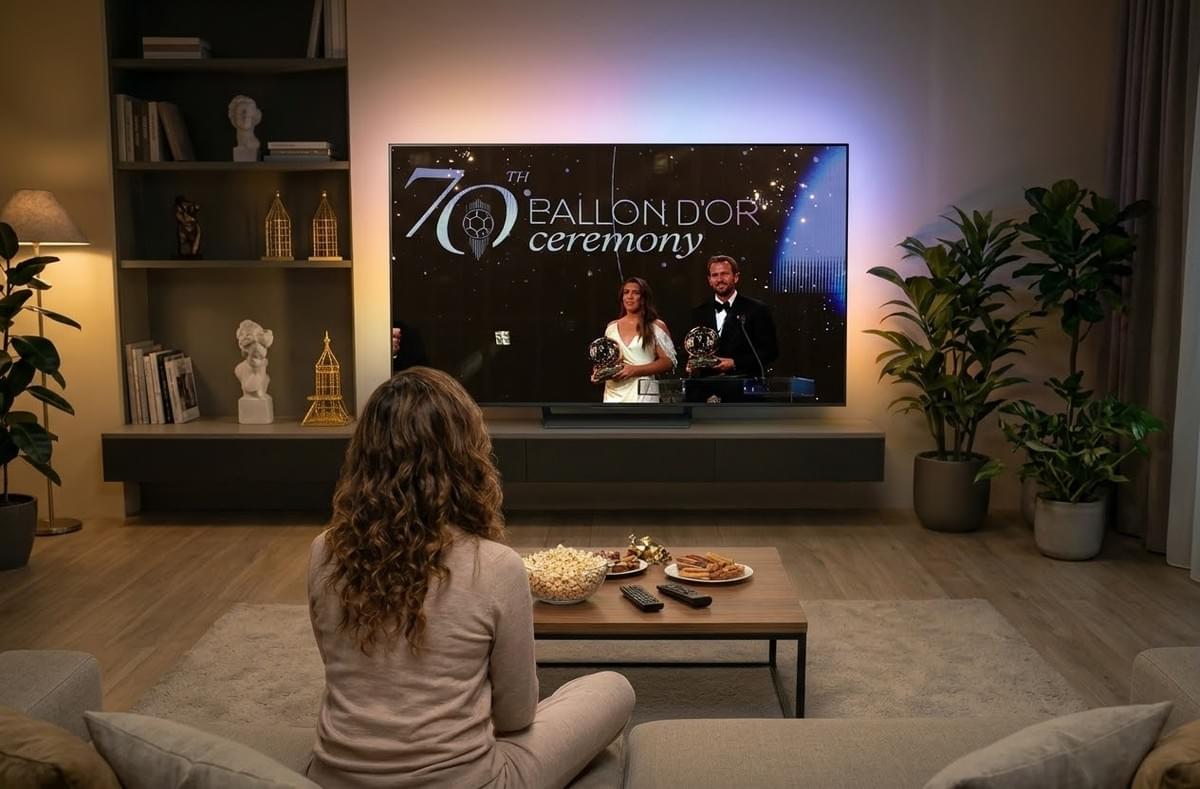
Yet it was the England captain, also taking home the Gerd Müller Trophy as the world's top scorer, who truly anchored the night. He became the first Englishman in twenty-five years to lift the prize, joining the legendary ranks of Stanley Matthews, Bobby Charlton, Kevin Keegan and Michael Owen. It was a triumph that resonated deeply with anyone who has ever put their head down, ignored the background noise and simply kept working toward a goal. His victory reminded the world that greatness does not always have to be flashy or precocious; sometimes, it is crafted through years of dedication and navigating all the twists and turns of the beautiful game. This accolade proves that Harry Kane has truly forged his own lane.
Kane's Lane by EJ for EJblogtv
an Enjoyment Journal about Everything EJ
xoxo