Well, hello there to the Spanish world champions!
España is a nation whose hypnotic rhythm on the football pitch has once again captivated the global imagination. The story of España’s run to the 2026 World Cup final isn't only about a team winning football matches; it is about a thorough reinvention of how a nation plays the game. For years, Spanish football entailed an elegant style of passing that prioritised keeping the ball at all costs, but under head coach Luis de la Fuente and his dedicated coaching staff, this squad showed the world something entirely new. They kept the soul of their deep-rooted possession game but injected it with a terrifying, supersonic pace that left opponents completely breathless.
La Roja separated themselves from every other powerhouse nation in the tournament by creating chaotic overloads on the wings while remaining completely unshakeable at the back. Instead of passing sideways to slowly wear teams down, España weaponised vertical speed. With an 18-year-old superstar like Lamine Yamal on one flank and the lightning-fast Nico Williams on the other, they ran directly at defenders, forcing rivals into desperate, frantic transitions that no one could track. Yet, they didn't just attack; they defended by choking teams in their own halves. Driven by the relentless energy of players like Gavi and Fabián Ruiz, España led the tournament in high-turnover recoveries, systematically crushing opposition counter-attacks before they could even cross the halfway line. The potent combination of brilliant offence and suffocating defence is what established the team as a global force to be reckoned with. They have proven that they are elite world contenders, establishing a standard of execution that is exceptional and positioning themselves as the ultimate champions.
An innate sense of cohesion coupled with intense passion is what elevates this Spanish style of play into something completely unrivalled and original, which sets them apart from all others. Individual ego was entirely absent from the squad; while some nations assemble star-studded groups that rely on flashes of solo brilliance, España functions like a single living organism. Every movement is perfectly synchronised, born from a football culture where players grow up understanding space, tempo and telepathic teamwork from childhood. A collective devotion that radiates from the pitch fuels this structural harmony. It is visible in the way they hunt the ball in packs, celebrate a defensive block with the same ferocity as a goal and play with a joyful, unburdened freedom. The rare blend of surgical tactical intelligence and raw emotional fire creates an identity that cannot be copied or manufactured.
Memorable tournament milestones forged the ultimate balance between an electric forward line and total defensive stability. After an opening draw against Cape Verde, the team found its rhythm in Atlanta with a dominant 4-0 victory over Saudi Arabia. As the knockout rounds intensified, so did the drama. In a fierce round of 16 Iberian derby, substitute Mikel Merino became an instant hero by scoring a dramatic stoppage-time winner against Portugal. España's backline—anchored by goalkeeper Unai Simón and the centre-back pairing of young Pau Cubarsí and veteran Aymeric Laporte—went on an incredible defensive shutout run, which was finally broken when they conceded a single goal during a tense 2-1 quarter-final victory over Belgium. By the time they reached the semifinals against France, España delivered a masterclass. A clinical penalty from top scorer Mikel Oyarzabal and a formidable strike from Pedro Porro are what sealed a flawless 2-0 win, thus securing their ticket to the ultimate stage.
The current squad’s dominance directly mirrors the DNA of the historic España side that captured the country's first World Cup title back in 2010. Guided by Vicente del Bosque, that unforgettable team conquered the world in my home country, South Africa, through the mesmerising rhythm of short passing and total positional supremacy. Led by the heroic saves of Iker Casillas, shielded by Carles Puyol and Gerard Piqué and orchestrated by the immortal midfield trio of Sergio Busquets, Xavi and Andrés Iniesta, they starved opponents of the ball. True to the traditions of the nation, the 2010 team built their triumph on an extraordinary defence, winning every single knockout match by a precise 1-0 scoreline, capped off by Iniesta’s immortal extra-time winner in Johannesburg.
The grand landscape of international soccer underwent a massive tectonic shift as the world transitioned from compact boundaries to a historic, sprawling field across North America. Expanding to 48 teams and introducing an entirely new Round of 32 elimination bracket, the tournament altered the very mathematics of survival. To reach the peak, nations had to endure an unprecedented volume of matches, a logistical gauntlet that completely scrambled the established hierarchy of previous years. Powerhouses that once comfortably controlled their destinies found themselves navigating wild card elements and unprecedented physical demands, completely rewriting the final standings.
Individual titans rose amidst this relentless tournament structure to define the summer with staggering milestones. Kylian Mbappé rewrote the record books for France, exploding into the history books as the all-time top scorer in World Cup history by advancing his career total to 22 goals. He pushed his tournament tally to 8 goals, punctuated by a sensational display in a high-scoring, chaotic third-place battle. Right beside him in the twilight of an iconic career, Lionel Messi single-handedly willed Argentina forward, matching that 8-goal summit and directly generating the vast majority of his team's offensive output. Meanwhile, Erling Haaland orchestrated an unforgettable, historic breakthrough for Norway, carrying his nation to its first-ever quarterfinal on the back of 7 clinical strikes, while England's dynamic tandem of Jude Bellingham and Harry Kane combined for 12 goals to terrify opposing backlines. Playmakers like Michael Olise pulled the creative strings in the deeper spaces of the pitch, while España's midfield engine, Rodri, dictated games with absolute positional dominance, and Cristian Romero anchored Argentina with fierce physical defiance.
A dramatic sequence of events shook the final hierarchy to its core in this brutal, expanded crucible. Powerhouse teams fought through the gruelling knockout tiers, but traditional giants like Brasil and Portugal fell much earlier than anticipated, pushed out in the Round of 16 alongside a competitive tier of closing squads. It was in this precise bracket that the host nations all made it to the top of the charts. United States beat the other two by advancing further in the ranks, which came as no surprise. For more details, you can refer to my blog titled Sideline Sighttings. Mexico, Canada, Colombia, Egypt and Paraguay all finished in the top twenty. The tournament's final tiers were solidified in the closing days, and in an unbelievable, 10-goal third-place play-off masterpiece, England emerged victorious over France in a thrilling 6-4 saga, capturing the third-place bronze medal and pushing the French squad down to 4th. A fierce collection of efforts from Belgium, Norway, Switzerland and Morocco are calculated by total tournament points and goal metrics and the rankings rounds up as follows:
1. España
2. Argentina
3. England
4. France
5. Belgium
6. Norway
7. Switzerland
8. Morocco
9. Portugal
10. USA
11. Brasil
12. Mexico
13. Colombia
14. Egypt
15. Cananda
16. Paraguay
17. Germany
18. Croatia
19. Japan
20. Ivory Coast
Deep emotional resonance echoed across the stadiums as this expanded tournament also served as a profound stage for farewells. Final salutes were chanted to the iconic pioneers who defined an entire generation. Fans watched with heavy hearts and roaring applause as legendary icons stepped onto the pitch for their final, emotional World Cup matches. These departing masters poured their remaining fragments of physical energy into the tournament, leaving an empty tank and a pristine legacy for the youth to inherit. Global spectators shared a collective moment of immense gratitude for all forty-eight participating teams, each bringing their unique heritage, sacrifices and dreams to unite the world in a beautiful festival of athletic pursuit.
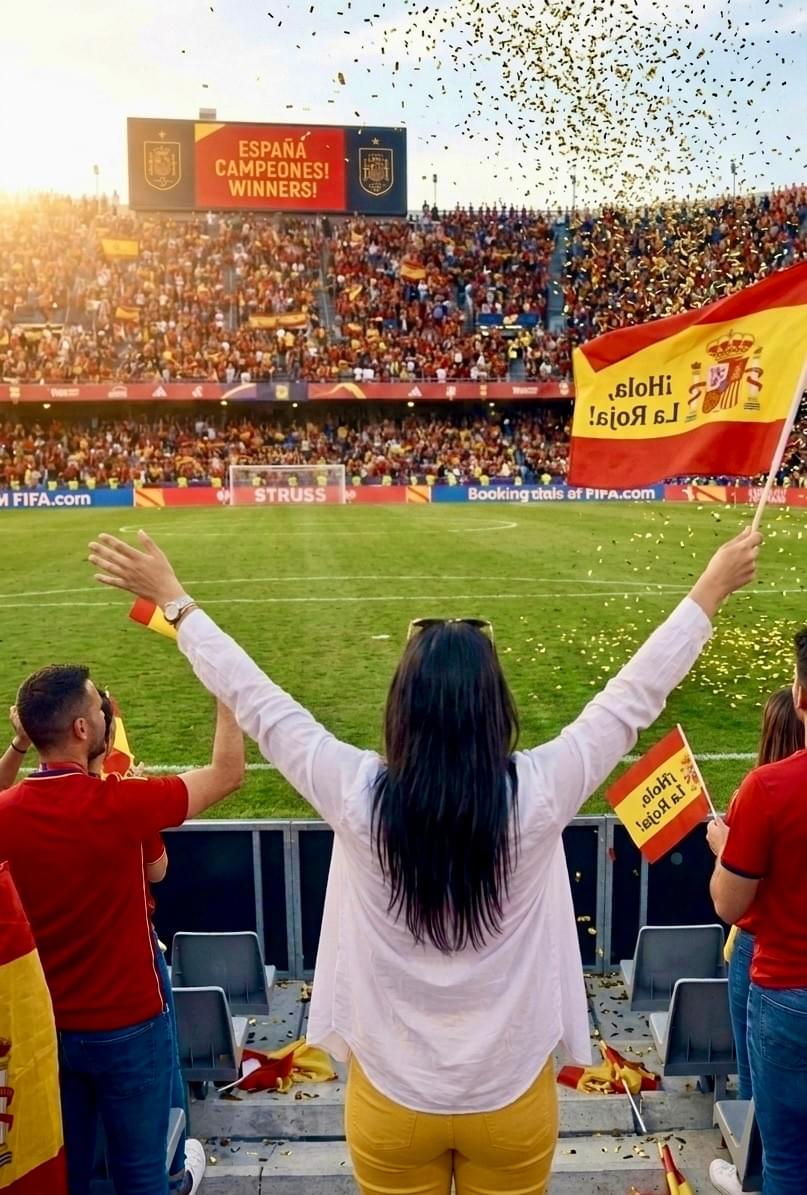
The Spanish generation of 2010 suffocated opponents with patience, but the current group achieved glory through relentless, breathless pressure and an incredible depth where replacements like Martín Zubimendi and Mikel Merino stepped in perfectly to close out games. The formula held strong until the very end, culminating in absolute triumph. Seizing victory in the final match, España has shone brighter than any other squad, scaling the absolute summit of global football to claim the ultimate crown. This campaign stands as a majestic tribute to a football culture that perfectly balances youthful brilliance with veteran discipline. ESP is a dream, a soccer utopia where artistic expression meets ruthless athletic perfection, floating seamlessly between the romance of their history and the raw power of their future. By marrying the timeless philosophy of their past with a modern, direct urgency, this Spanish side has etched its name into history, leaving an enduring legacy of excellence that will inspire generations of football fans for years to come. In witnessing such pure sporting genius on the global stage, one cannot help but notice this nation and greet them with a heartfelt ¡hola, La Roja!
Hola La Roja by EJ for EJblogtv
an Enjoyment Journal about Everything EJ
xoxo