Namibia is a country where the earth speaks through the wind and shifting sand, offering a place of immense space, profound silence and dramatic beauty. For any traveller, arriving here feels like stepping onto another planet, where the landscape stretches endlessly toward a distant horizon encompassing a rare sense of true isolation and peace. My journey began after I read a captivating book called Desert Flower, which sparked a deep fascination within me. It inspired me to search for some of these rare, exquisite desert rose mineral formations. My quest eventually led me straight to the arid landscapes of Namibia, where these delicate crystals are formed by nature over centuries. Far from being a living plant, a desert rose is a beautiful crystalline cluster of gypsum or baryte that forms flat, blade-like plates fanning outwards in circular, overlapping clusters to mimic the delicate layers of a blooming flower. Because they grow directly inside shifting sand, they trap thousands of gritty grains within their matte, earthy-toned petals of cream, tan and rust.
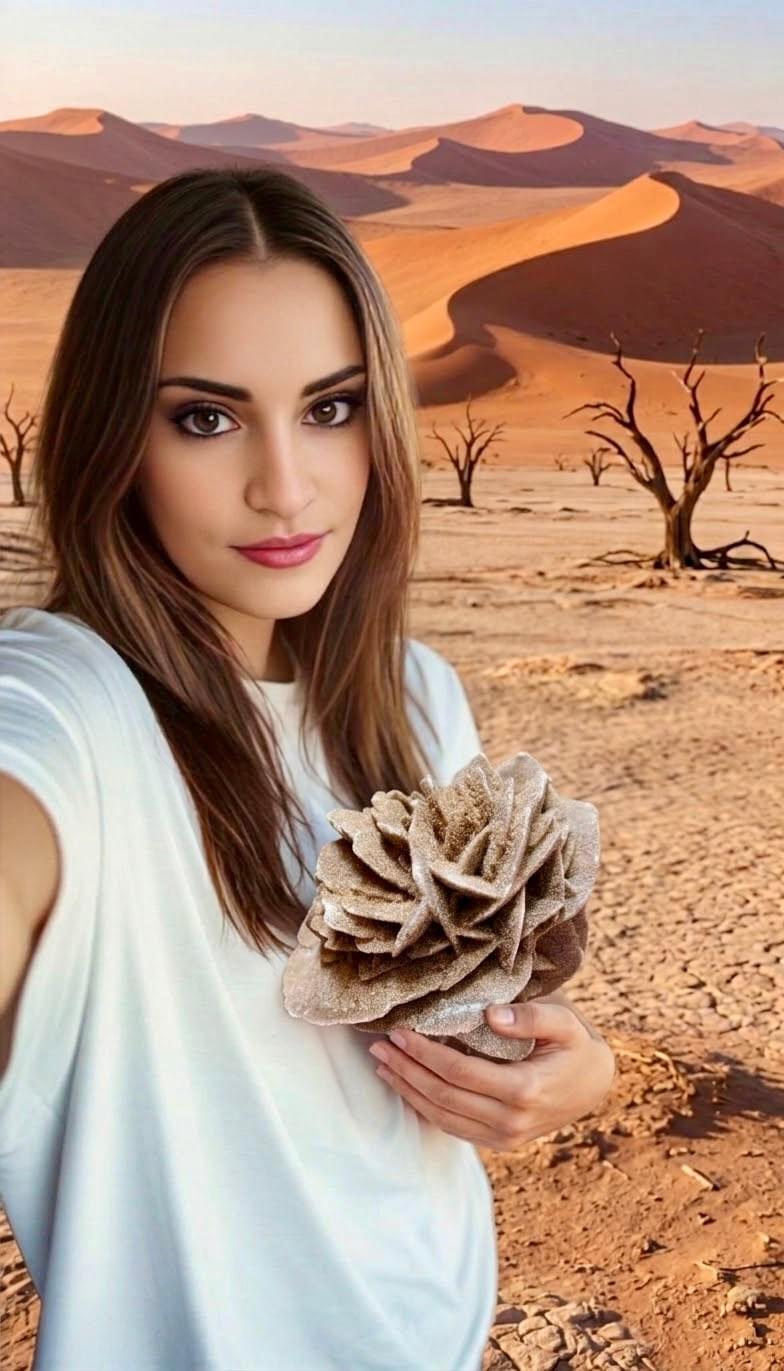
People choose this destination because it captivates the soul with adventures, reflections and wildlife discoveries found nowhere else on Earth. You can watch history come alive at Kolmanskop, a haunting ghost town slowly swallowed by sand after a historic diamond rush. Further north, Etosha National Park offers incredible game viewing as elephants, lions and rhinos gather around massive salt pans, while the bleak and beautiful Skeleton Coast remains littered with whale bones and historic shipwrecks. The human footprint in Namibia is as fascinating as its terrain, creating a unique cultural fabric. This vibrant diversity is reflected in the sounds of the country, where over thirty languages are spoken. While English serves as the official language, you will regularly hear the widespread lingua franca of Afrikaans, the historic German communities and the poetic clicks of native Khoisan tongues. The indigenous tribes maintain their traditional nomadic lifestyle in the harsh northern regions, recognisable by the red ochre paste they use to protect their skin and hair from the fierce sun. In sharp contrast, cities like Swakopmund and the capital, Windhoek, feel like a surreal slice of Europe in Africa. Landing in the capital introduces you to a calm, orderly hub sitting on a high inland plateau, a perfect place to explore bustling street markets and sample ethnic cuisines. Journeying west leads to Swakopmund, the adventure capital of the country, where striking German architecture stands alongside a foggy Atlantic shoreline. Moving further inland reveals Otjiwarongo, a bustling cultural and agricultural hub known in the Herero language and celebrated globally as a vital sanctuary for cheetah conservation. Other notable stopovers include Walvis Bay with its massive marine lagoon, Okahandja with its famous open-air woodcarvers' market and the towering granite peaks of Spitzkoppe. This clash of worlds culminates in the ultimate visual masterpiece at Sandwich Harbour, which presents the perfect contradiction of dry land and ocean waters. Here, the massive, burning-orange dunes of the Namib Desert plunge directly into the cold, crashing blue waters of the Atlantic Ocean. It is a breathless meeting of extremes where absolute dryness confronts an infinite sea, creating an unforgettable coastal spectacle that defies imagination. This landscape is an open playground for a wide range of thrilling desert activities. Adrenaline seekers can rocket down the sheer faces of the oldest dunes on a sandboarding or sand boating excursion or navigate the winding paths of the shifting sands on a high-speed quad biking tour. For a change of pace, deep-desert ecological tours unveil the secret chameleons and geckos that call the dry sands home, while early-morning hot air balloon flights let you drift silently over the vast, glowing landscape as the sun rises. Deep in the restricted southern Sperrgebiet region, specialised safaris allow you to step back in time for an authentic excavation site tour, where the desert winds still whip up a glittering haze of diamond dust.
The way you choose to travel through this landscape fundamentally changes how you connect with the land, starting right from your departure in Cape Town. Opting for a fly-in safari compresses the vast distance seamlessly, taking just over two hours on a direct flight from Cape Town International Airport to Windhoek. This choice allows you to soar high above the earth, turning the terrain into a living map and giving you a bird's-eye view of the desert shapes, shipwrecked coasts and free-roaming wildlife while saving precious time. On the other hand, choosing to drive from Cape Town is a gritty, immersive road expedition. It requires covering roughly 1,480 kilometres, which translates to about 15 hours of pure driving time. Most travellers break this massive journey down into a rewarding two or three-day road trip. Navigating the long gravel roads demands patience, but it rewards you with the true scale of the country. By car, you feel the heat change through the window, watch the dirt change colour from white to deep red and experience the thrill of pitching a camp under a blanket of brilliant desert stars. I have tried both and enjoyed them equally for different reasons. The quick flight to Namibia is convenient, and it is marvellous to view the terrains from high in the sky; however, the drive is scenic and gives you a real feel for the land, which too is charming. Whether you view it from the clouds or experience it on the road, Namibia leaves a lasting impression that is forever embodied by the wild beauty of the desert rose.
Desert Rose by EJ for EJblogtv
an Enjoyment Journal about Everything EJ
xoxo